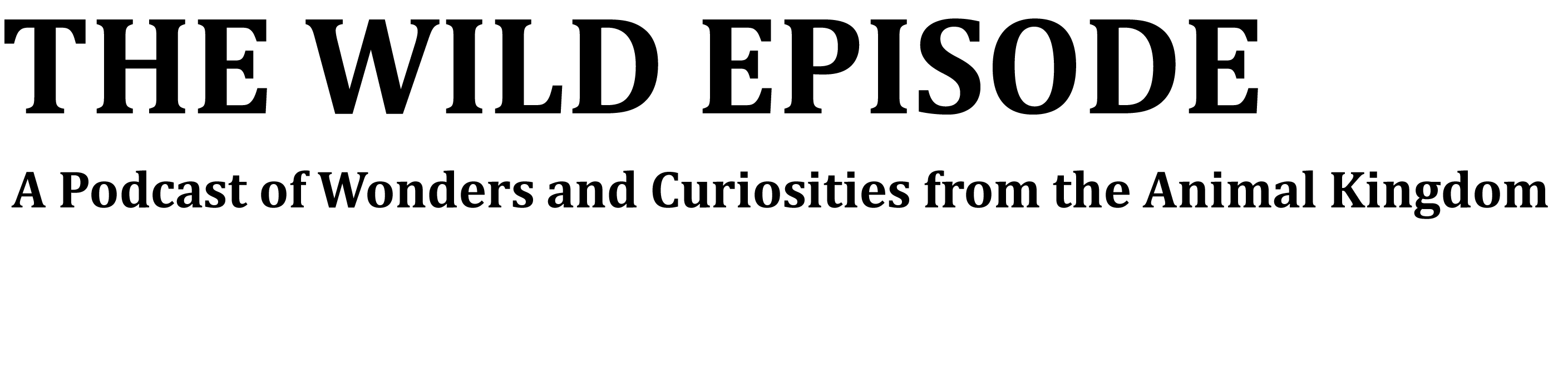
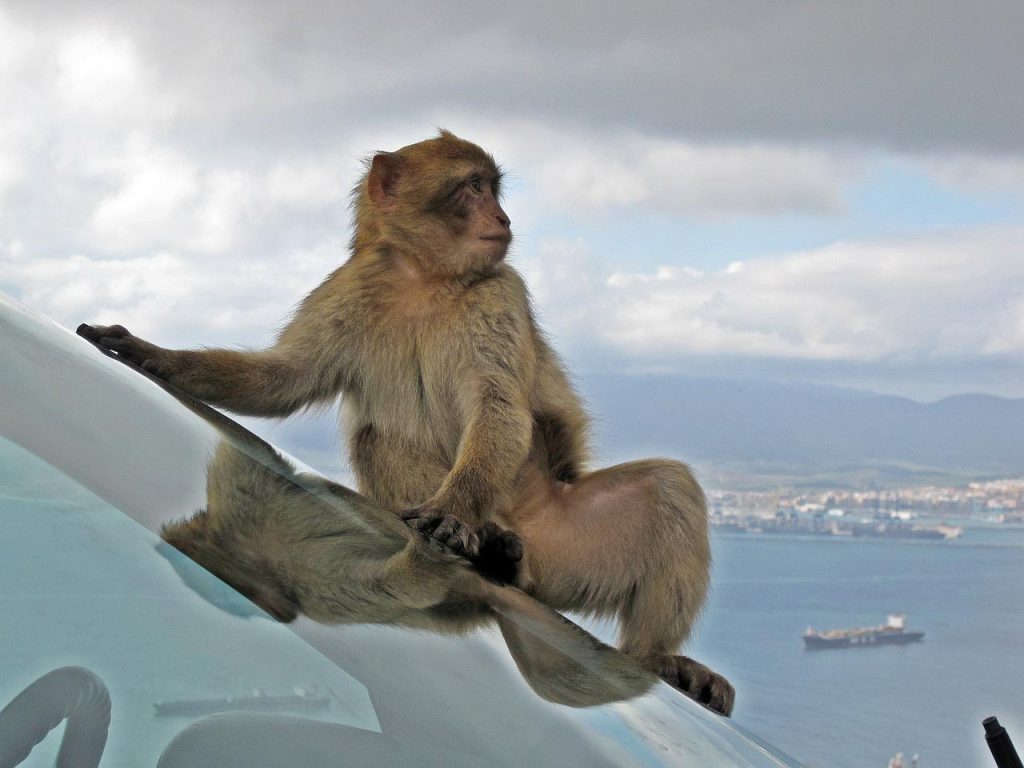
The Barbary Macaque (Macaca sylvanus) is the only macaque that lives outside Asia, hanging on in pockets of the wild Atlas Mountains in North Africa. And, famously, living a semi-wild life on the Rock of Gibraltar. It’s also been responsible for at least a couple of interesting human deaths, and exploring those connections takes us all over the place, and all over time: monkeys in prehistoric Europe, the Spanish Civil War, the Carthaginian wars, Roman arenas and a whole lot more …
Subscribe to the Podcast and never miss a Wild Episode! (P.S. Make your friends and family subscribe too!)
And please do E-mail the show if you have any comments, complaints, corrections, suggestions, encouragement or even just want to say hello.
And don’t forget, you can now check out The Wild Episode’s very own Facebook page.
Show notes below …
Barbary macaques in their natural environment, in the mountains of Morocco:
This is more like what it’s liable to look like when you put them in the urbanised environment of Gibraltar:
Possibly your best starting place for a heap of good info on the species and its current situation is the Barbary Macaque Awareness and Conservation website.
For the Gibraltar population in particular, you could start with the info provided by the group responsible for looking after them: The Gibraltar Ornithological and Natural History Society.
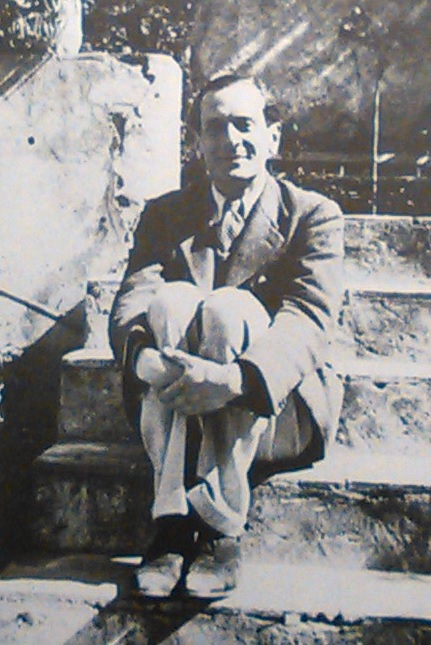
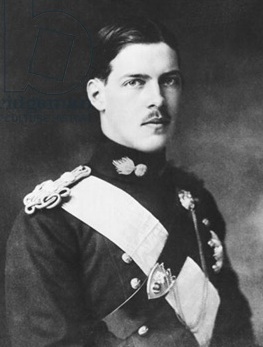
And here are our two unfortunate victims.
Basil Murray:
and King Alexander of Greece:
You can read Claud Cockburn’s account of the strange death of Basil Murray over here.
And the basics of the sad fate of Greece’s King Alexander are outlined over here.
But on to the real star here, the Barbary macaque itself …
To get a (hopefully) accurate overview of any species, what you always hope is that someone’s done what’s called a review article, pulling together a whole load of scientific knowledge of the species in question. And fortunately just that has been done for the Barbary macaque. So here you go: Jack Fooden, Systematic Review of the Barbary Macaque, Macaca Sylvanus (Linnaeus, 1758), Fieldiana Zoology, 2007(113), 1-60, (26 October 2007)
You can download a PDF on the prehistory of macaques in Europe from this site: Elton, Sarah & O’Regan, Hannah. (2014). Macaques at the margins: The biogeography and extinction of Macaca sylvanus in Europe. Quaternary Science Reviews. 96. 10.1016/j.quascirev.2014.04.025.
And here are a selection of other papers on various relevant topics:
Modolo, Lara & Salzburger, Walter & Martin, Robert. (2005). Phylogeography of Barbary macaques (Macaca sylvanus) and the origin of the Gibraltar colony. Proceedings of the National Academy of Sciences of the United States of America. 102. 7392-7397.
Direct PDF link. Fischer, Julia & Hammerschmidt, Kurt. (2002). An Overview of the Barbary Macaque, Macaca sylvanus, Vocal Repertoire. Folia primatologica; international journal of primatology. 73. 32-45.
A PDF is available for download of: Fa, John E.. (1984). Habitat distribution and preference in Barbary macaque (Macaca sylvanus). International Journal of Primatology. 5. 273-286.
As is a PDF of: Ménard, Nelly & Vallet, Dominique. (1997). Behavioral responses of Barbary macaques (Macaca sylvanus) to variations in environmental conditions in Algeria. American journal of primatology. 43. 285-304. 10.1002/(SICI)1098-2345(1997)43:4
Full text of this one is available to read online, which if nothing else emphasizes just how tough life can be in winter in Atlas Mountains (spoilers: even Barbary macaques don’t always make it through a bad winter in the mountains!): McFarland, Richard & Majolo, Bonaventura. (2013). Coping with the cold: Predictors of survival in wild Barbary macaques, Macaca sylvanus. Biology letters. 9.
Direct PDF link. A sad but self-explanatory title for this one: Camperio ciani, Andrea & Palentini, Loris & Arahou, Mohamed & Martinoli, L. & Capiluppi, Claudio & Mouna, Mohamed. (2005). Population decline of Macaca sylvanus in the Middle Atlas of Morocco. Biological Conservation. 121. 635-641.
Oh, and just in case you’re interested, here are the Wikipedia pages for the Barbary lion and the Atlas bear and the North African elephant.
Music
Opening & Closing Themes: Running Waters and Acoustic Meditation by Audionautix (Jason Shaw), from audionautix.com. CC BY 3.0.
And modified versions of the following pieces:
The Ants Built a City on his Chest by Doctor Turtle. CC BY 4.0