Moniliformis moniliformis is an example of one of the strangest groups of animals in the world: the parasitic Acanthocephalans, or the Thorny-Headed Worms …
You can support the show – keep it going, keep it growing, show you value it – at The Wild Episode Substack. Become a paid subscriber there to get access to occasional bonus episodes and to keep the show on the road. Even as a free subscriber, you’ll still get regular posts/e-mails celebrating the wonders and curiosities of the Animal Kingdom.
Feel free to E-mail the show if you have any comments, complaints, corrections, suggestions, encouragement or even just want to say hello.
Please do share the show on social media, and rate and review it on your podcast app. That helps a lot. But best of all, of course, become a paid subscriber at The Wild Episode Substack.
Thank you!
Show notes below …
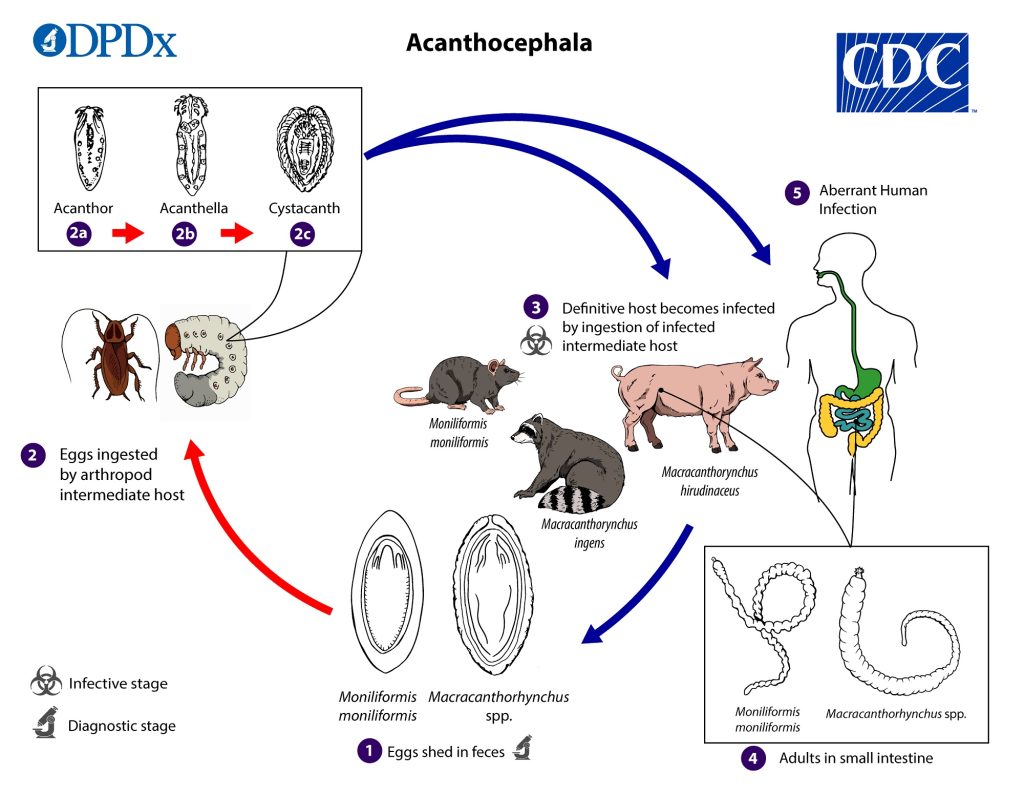
To start, a visualization of the Acanthocephalan life-cycle, including the example of Moniliformis moniliformis:
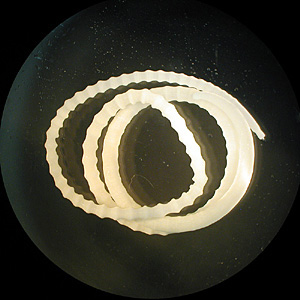
The only useable photo of Moniliformis moniliformis I can find is the one I’ve put in the title card for the episode …
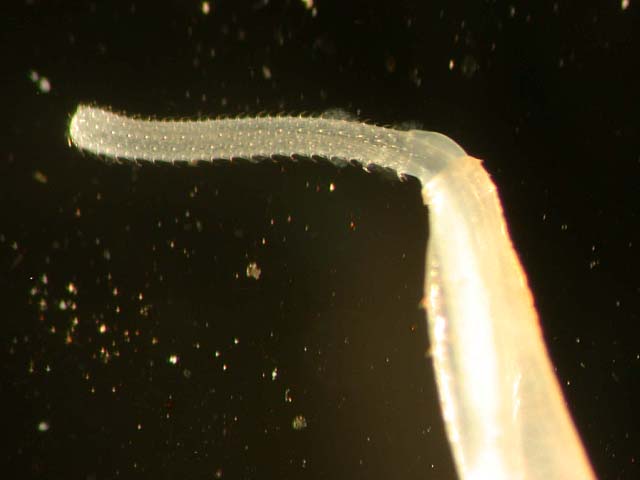
… but here’s a close-up of the thorny proboscis of a different species, just for illustrative purposes:
The Wikipedia pages for Acanthocephala as a whole and Moniliformis moniliformis in particular.
Here is Salvatore Calandruccio, he of the “gotta catch ’em all” approach to parasitology:
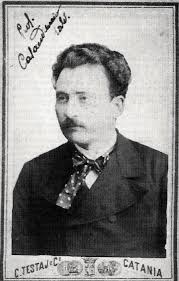
The best source in English I could find on his life and work is this: Napoli, Pugliese and Giannetto, 2023, Salvatore Calandruccio, Sicilian parasitologist: a story we never wanted to tell, Atti della Accademia Peloritana dei Pericolanti Classe di Scienze Medico Biologiche, Vol. 111(2)
For the history of self-experimentation in parasitology, including Calandruccio’s astonishing efforts in that area: Brabin, B., & Brabin, L. (2024). The relevance to medical science of doctors’ self-challenge experiments with pathogens or infectious agents: 1767-2022. Medicina Historica, 8(1), e2024010.
The best recent and freely accessible overview of the Acanthocephalans, and some of the mysteries surrounding them, is this: Perrot-Minnot et al., (2023). Hooking the scientific community on thorny-headed worms: interesting and exciting facts, knowledge gaps and perspectives for research directions on Acanthocephala. Parasite. 30. 23
And the best overview of Acanthocephaliasis in humans is: Mathison BA, Mehta N, Couturier MR. Human Acanthocephaliasis: a Thorn in the Side of Parasite Diagnostics. J Clin Microbiol. 2021 Oct 19;59(11)
And (Direct Link to PDF!) a review of the multiple ways Acanthocpehalans exercise behavioural manipulation of their hosts: Marion Fayard, François-xavier Dechaume-moncharmont, Rémi Wattier, Marie-jeanne Perrot-minnot. Magnitude and direction of parasite-induced phenotypic alterations: a meta-analysis in acanthocephalans. Biological Reviews, 2020, 95, pp.1233-1251.
Some science-y stuff specifically about Moniliformis moniliformis:
These all require a free JSTOR account, I’m afraid I couldn’t quickly find another open access source for them, although some of them probably are available elsewhere:
Sita, E. “THE LIFE-CYCLE OF MONILIFORMIS MONILIFORMIS (BREMSER, 1811), ACANTHOCEPHALA.” Current Science, vol. 18, no. 6, 1949, pp. 216–18.
Moore, Janice. “Altered Behavior in Cockroaches (Periplaneta Americana) Infected with an Archiacanthocephalan, Moniliformis Moniliformis.” The Journal of Parasitology, vol. 69, no. 6, 1983, pp. 1174–76.
Carmichael, Lisa M., and Janice Moore. “A Comparison of Behavioral Alterations in the Brown Cockroach, Periplaneta Brunnea, and the American Cockroach, Periplaneta Americana, Infected with the Acanthocephalan, Moniliformis Moniliformis.” The Journal of Parasitology, vol. 77, no. 6, 1991, pp. 931–36
Music
Opening & Closing Themes: Running Waters and Acoustic Meditation by Audionautix (Jason Shaw), from audionautix.com. CC BY 3.0.
Soundwork LXVII, Soundwork LXX and Soundwork LXXVII by Jon Shuemaker, CC BY 4.0