The Upside-Down Jellyfish of the genus Cassiopea are remarkable: they’re not only upside-down, but also photosynthetic, sleepy and capable of releasing stinging bombs into the water …
You can support the show – keep it going, keep it growing, show you value it – at The Wild Episode Substack. Become a paid subscriber there to get access to occasional bonus episodes and to keep the show on the road. Even as a free subscriber, you’ll still get regular posts/e-mails celebrating the wonders and curiosities of the Animal Kingdom.
Feel free to E-mail the show if you have any comments, complaints, corrections, suggestions, encouragement or even just want to say hello.
Please do share the show on social media, and rate and review it on your podcast app. That helps a lot. But best of all, of course, become a paid subscriber at The Wild Episode Substack.
Thank you!
Show notes below …
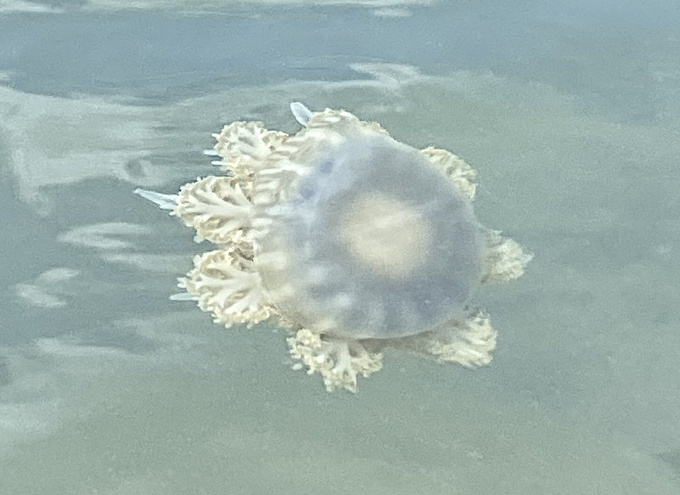
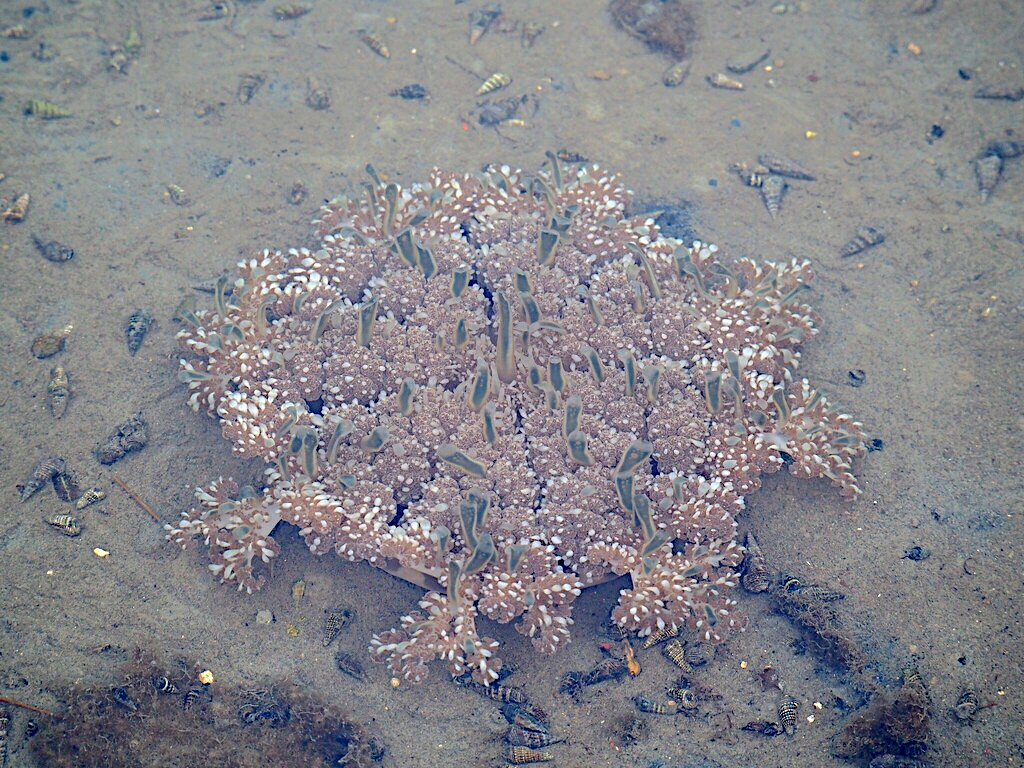
An Upside-Down Jellyfish (Cassiopea andromeda in this case) not upside-down:
and upside-down:
The Wikipedia pages for the genus Cassiopea as a whole and for two of the more commonly studied species: Cassiopea andromeda and Cassiopea xamachana. Many other interesting details that I couldn’t fit into the episode can be discovered by some digging around in there!
A lovely little BBC clip (of course it’s lovely, it’s from the BBC Natural History Unit) of Cassiopea jellyfish doing their thing:
The two most general and comprehensive reviews of the lives and strangeness of these jellyfish I came across are these:
Morejón-Arrojo, R.D., Mammone, M., López-Figueroa, N.B. et al. Life upside-down: review of ecological roles of Cassiopea (Cnidaria: Scyphozoa) in marine ecosystems—a look at the Western Atlantic. Discov. Ecol. 1, 7 (2025).
Ohdera AH, et al. (2018) Upside-Down but Headed in the Right Direction: Review of the Highly Versatile Cassiopea xamachana System. Front. Ecol. Evol. 6:35.
And on to more specific research:
Larson, R. J. (1997). Feeding behaviour of Caribbean Scyphomedusae: Cassiopea frondosa (Pallas) and Cassiopea xamachana Bigelow. Studies on the Natural History of the Caribbean Region, 73(1), 43–54.
Ames, C.L., Klompen, A.M.L., Badhiwala, K. et al. Cassiosomes are stinging-cell structures in the mucus of the upside-down jellyfish Cassiopea xamachana. Commun Biol 3, 67 (2020)
Madison A. Emery et al.; Trade-off between photosymbiosis and innate immunity influences cnidarian’s response to pathogenic bacteria. Proc. R. Soc. B 1 October 2024; 291 (2032): 20240428
Nath R, Bedbrook C, Abrams M, The Jellyfish Cassiopea Exhibits a Sleep-like State Current Biology, 2017; 27, 2984-2990.e3
Aguillon, R., Harduf, A., Sagi, D. et al. DNA damage modulates sleep drive in basal cnidarians with divergent chronotypes. Nat Commun 17, 3 (2026).
Music
Opening & Closing Themes: Running Waters and Acoustic Meditation by Audionautix (Jason Shaw), from audionautix.com. CC BY 3.0.