What connects feasting Japanese fish, a swimming pool in southern France and Alexander the Great’s encounter with the Gordian Knot? The extraordinary horsehair worm Paragordius tricuspidatus, a simple animal capable of astonishing things …
Subscribe to the Podcast and never miss a Wild Episode! (P.S. Make your friends and family subscribe too!)
If you want to support the podcast, and help keep it going, please share it on social media, and rate and review it (positively of course!) on your podcast app.
And please do E-mail the show if you have any comments, complaints, corrections, suggestions, encouragement or even just want to say hello.
And don’t forget, you can now check out The Wild Episode’s very own Facebook page. And, you can find and follow the show on Twitter!
Click ‘view post’ for the show notes …
The Kirikuchi char (Salvelinus leucomaenis japonicus), a localised subspecies of the white-spotted char, which – thanks to horsehair worms – eats a lot of orthopterans in the Autumn:
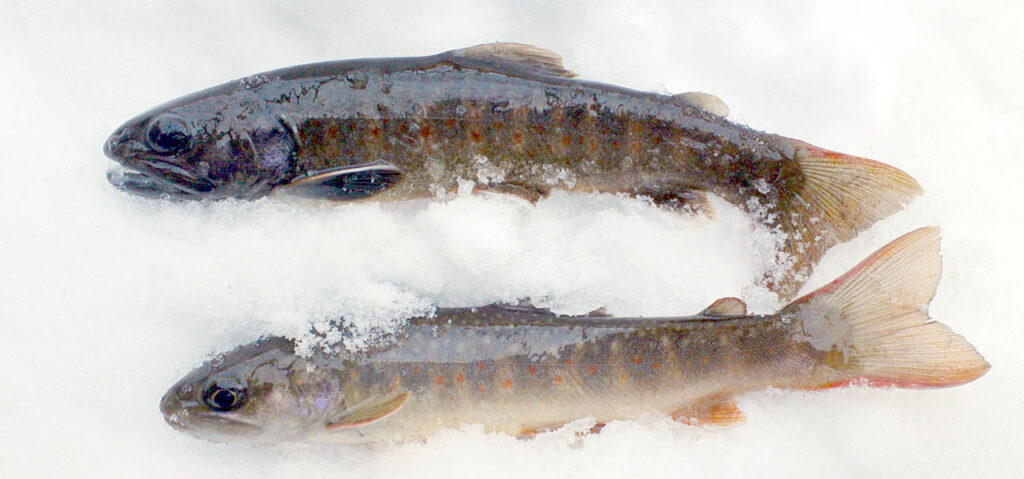
Photo credit: by Apple2000 – Self-photographed, CC BY 3.0
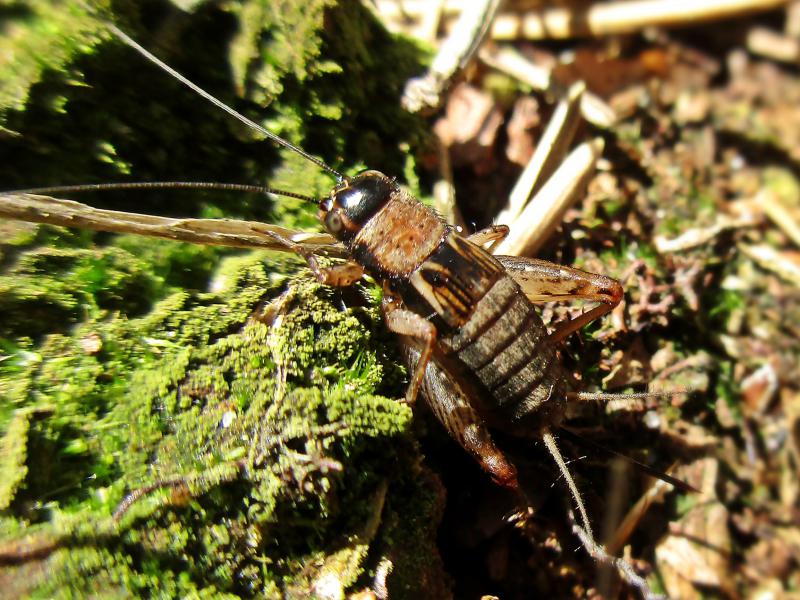
And the unfortunate wood cricket, Nemobius sylvestris:
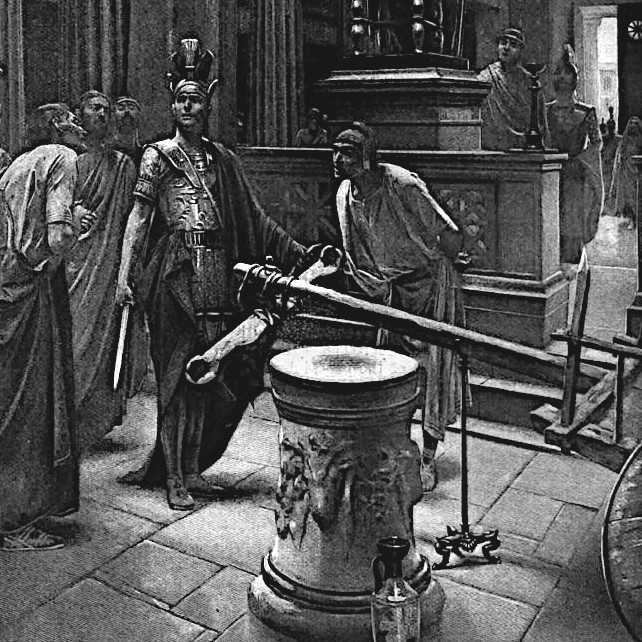
And just because why not, here’s Alexander the Great about to show off his idiosyncratic approach to solving the problem of the original Gordian knot:
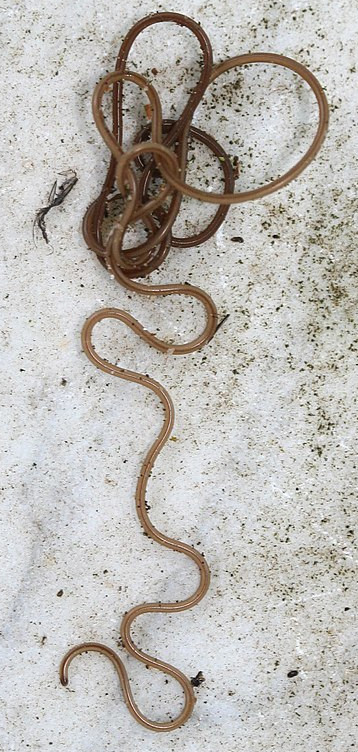
And a horsehair worm – not, full disclosure, Paragordius tricuspidatus, but let’s be honest, unless you’ve got a microscope and a relevant degree, they all look pretty similar:
This, however, is Paragordius tricuspidatus – an adult, in its natural aquatic habitat:
And here, in an astonishing but slightly grim bit of film, we see precisely what I talk about in the episode – a wood cricket, a swimming pool and a Paragordius tricuspidatus. This is the phantom thread in action:
The most recent/comprehensive overview of horsehair worms as a whole group I could find is: Bolek, Matthew & Schmidt-Rhaesa, Andreas & Villalobos, L. & Hanelt, Ben. (2015). Phylum Nematomorpha.
The Kirikuchi char, nematomorphs and orthopterans: Sato, Takuya & Watanabe, Katsutoshi & Kanaiwa, Minoru & Niizuma, Yasuaki & Harada, Yasushi & Lafferty, Kevin. (2011). Nematomorph parasites drive energy flow through a riparian ecosystem. Ecology. 92. 201-7.
Horsehair worms, orthopterans and a French swimming pool: Thomas, F., Schmidt-Rhaesa, A., Martin, G., Manu, C., Durand, P. and Renaud, F. (2002), Do hairworms (Nematomorpha) manipulate the water seeking behaviour of their terrestrial hosts?. Journal of Evolutionary Biology, 15: 356-361.
Direct link to PDF warning! Daoust, S.P., Schatz, B., Missé, D. and Thomas, F. (2012), Ecology of Gordian knots in natural conditions. Invertebr Biol, 131: 294-300.
David, Biron & Marche, Laurent & Ponton, Fleur & Loxdale, Hugh & Galotti, N & Renault, L & Joly, C & Thomas, Frederic. (2005). Behavioural manipulation in a grasshopper harbouring hairworm: A proteomics approach. Proceedings. Biological sciences / The Royal Society. 272. 2117-26.
Thomas, Frédéric, P Ulitsky, Roger Augier, Nicole Dusticier, Damilohun. Samuel, Colette Strambi, David G. Biron and Myriam Cayre. “Biochemical and histological changes in the brain of the cricket Nemobius sylvestris infected by the manipulative parasite Paragordius tricuspidatus (Nematomorpha).” International journal for parasitology 33 4 (2003): 435-43.
Ponton, F., Lebarbenchon, C., Lefèvre, T. et al. Parasite survives predation on its host. Nature 440, 756 (2006).
Ponton, Fleur & Lebarbenchon, Camille & Lefevre, Thierry & Thomas, Frederic & Duneau, David & Marche, Laurent & Renault, L & Hughes, David & David, Biron. (2006). Hairworm anti-predator strategy: A study of causes and consequences. Parasitology. 133. 631-8.
Music
Opening & Closing Themes: Running Waters and Acoustic Meditation by Audionautix (Jason Shaw), from audionautix.com. CC BY 3.0.
Modified versions of: Cave and Wild bird by Gurdonark, CC BY 4.0; Blooming Flower by Lee Rosevere, CC BY 4.0