
The Golden Rocket Frog (Anomaloglossus beebei) – an amazing little frog that lives only in one small corner of South America and whose life revolves around the very specific architecture of one – also amazing – plant.
You can support the show – keep it going, keep it growing – at The Wild Episode Substack. Become a paid subscriber there to get access to occasional bonus episodes. If you’d rather just stick with a free sign-up there, that’s fine: you’ll still get regular posts/e-mails celebrating the wonders and curiosities of the Animal Kingdom.
Feel free to E-mail the show if you have any comments, complaints, corrections, suggestions, encouragement or even just want to say hello.
Please do share the show on social media, and rate and review it (positively of course!) on your podcast app. That helps a lot. But best of all, of course, become a paid subscriber at The Wild Episode Substack.
And don’t forget, you can check out The Wild Episode’s very own Facebook page. And, you can check out Twitter and BlueSky.
Thank you!
Show notes below …
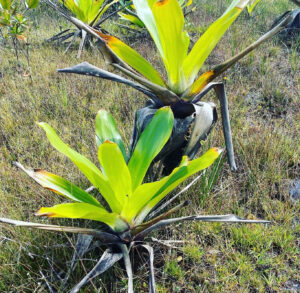
The giant bromeliad Brocchinia micrantha (it can get much bigger than this, but the structure/arrangement of the leaves is what matters, and that’s consistent):
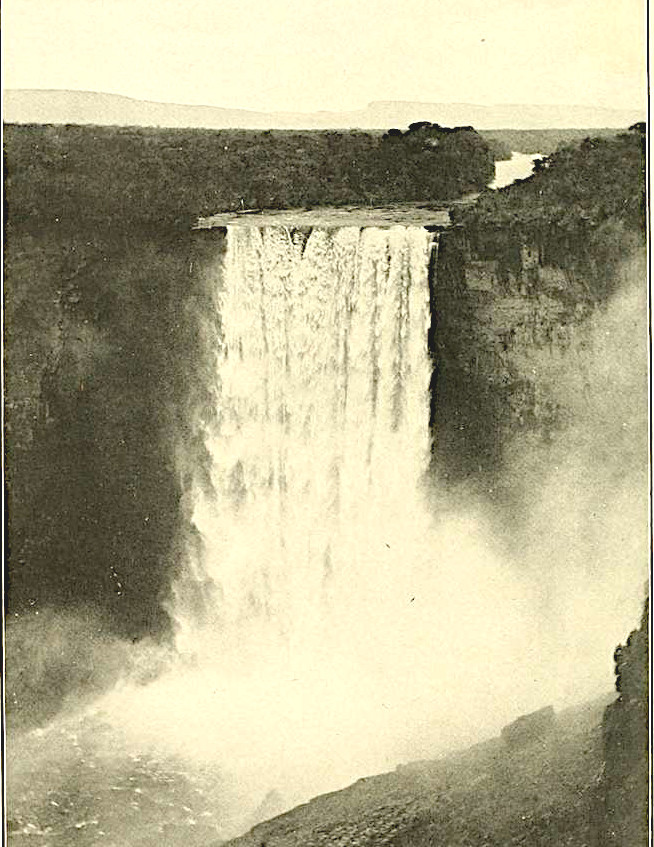
The defining geographical feature of our story, Kaieteur Falls:
And, not far from the Falls, in a phytotelma on a giant bromeliad, the Golden Rocket Frog:

A handful of nice terminological/etymological things I didn’t get to in the episode, because time you know:
Phytotelma literally means, in Greek, ‘plant-pond’. Couldn’t get much clearer than that.
Anomaloglossus beebei, the scientific name of the Golden Rocket Frog, more or less means “Beebe’s weird-tongued frog”. They, and other species in the same genus, have mildly unusual tongue anatomy – the one defining, distinctive feature of the genus, apparently, but one of the least interesting things about these frogs, tbh.
And why are they called rocket frogs? Probably should’ve mentioned this in the episode, really, because it’s an obvious question, but the answer’s not especially interesting: various frogs of various different types get called ‘rocket’ frogs, as far as I can work out, just because they’re a bit pointy in shape and/or they’re explosive jumpers.
The female golden rocket frog really is a striking beauty:

The male a bit less so, but here’s one calling:
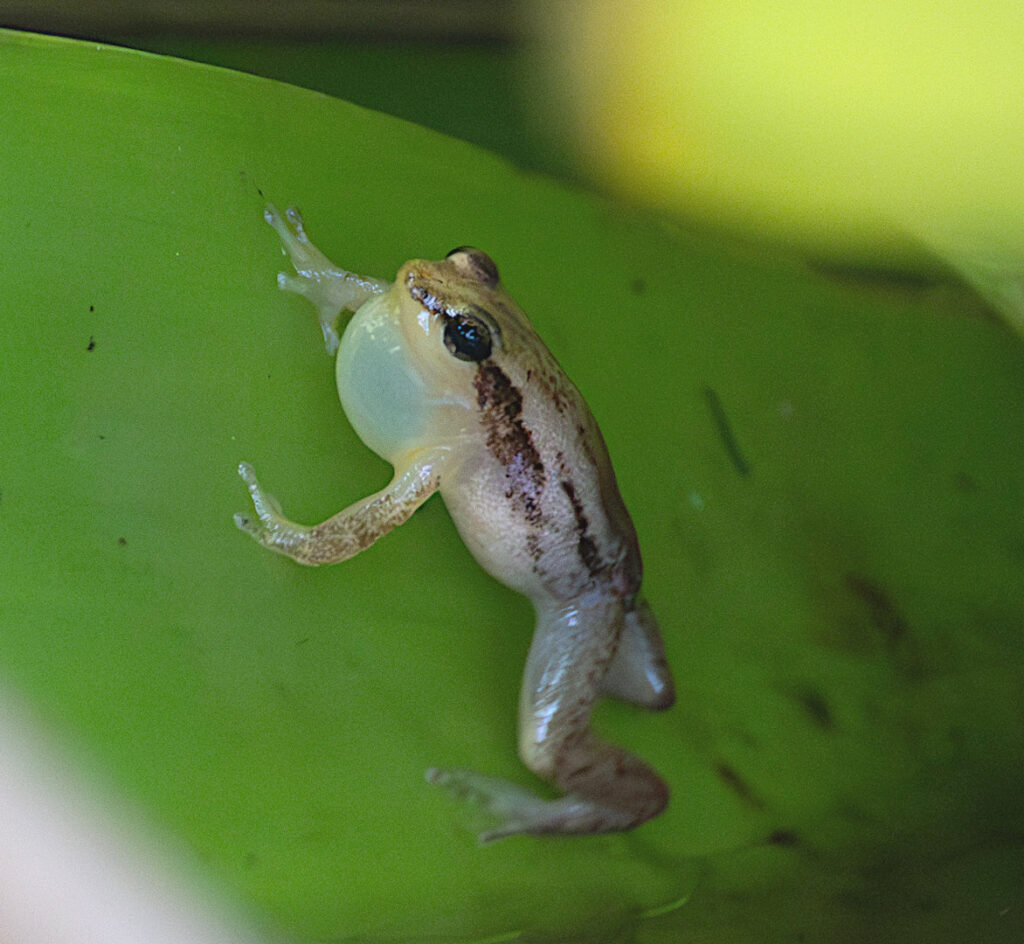
Photo: David McCorquodale, via iNaturalist, CC BY 4.0
You’ll notice, basically every photo you can find of these critters, they’re on a Brocchinia micrantha. This frog and this plant really are inseparable.
There’s quite a lot of research on the Golden Rocket Frog, so there’s way more detail available than I get into in the episode. This is one where you can disappear down a bit of a rabbit hole, but let’s start with a couple of non-technical, newsy reports on relevant research findings:
I highly recommend clicking through to this link just because it includes a fantastic photo of a male golden rocket frog transporting a tadpole on its back: Research investigates reproductive resource defense in golden rocket frogs.
And this one’s a particularly nice, interesting and informative article: Female golden rocket frogs know a good father when they hear him at Mongabay
Science:
Fouilloux, Chloe & Vallejos, Johana & Tumulty, James. (2023). Home is where the high-quality resources are: nursery characteristics and territory distribution suggest reproductive resource defense in golden rocket frogs. Evolutionary Ecology. 38. 1-17
Pettitt, Beth & Bourne, Godfrey & Bee, Mark. (2012). Quantitative acoustic analysis of the vocal repertoire of the golden rocket frog (Anomaloglossus beebei) The Journal of the Acoustical Society of America. 131. 4811–4820.
FYI: Direct Link to PDF Pettitt, B.A., Bourne, G.R. and Bee, M.A. (2013), Advertisement Call Variation in the Golden Rocket Frog (Anomaloglossus beebei): Evidence for Individual Distinctiveness. Ethology, 119: 244-256.
James P Tumulty, Mark A Bee, Ecological and social drivers of neighbor recognition and the dear enemy effect in a poison frog, Behavioral Ecology, Volume 32, Issue 1, January/February 2021, Pages 138–150
And three that you might (or might not) be able to access elsewhere, but they’re definitely all available with a free account on JSTOR, because that’s where I read them:
Bourne, Godfrey R., et al. “Vocal Communication and Reproductive Behavior of the Frog Colostethus Beebei in Guyana.” Journal of Herpetology, vol. 35, no. 2, 2001, pp. 272–81.
Tumulty, James P., et al. “Identity Signaling, Identity Reception, and the Evolution of Social Recognition in a Neotropical Frog.” Evolution, vol. 76, no. 1, 2022, pp. 158–70.
Pettitt, Beth A., et al. “Predictors and Benefits of Microhabitat Selection for Offspring Deposition in Golden Rocket Frogs.” Biotropica, vol. 50, no. 6, 2018, pp. 919–28.
Music
Opening & Closing Themes: Running Waters and Acoustic Meditation by Audionautix (Jason Shaw), from audionautix.com. CC BY 3.0.
Modified versions of: Bait, Overgrown and Mindless by AvapXia, CC BY 4.0; Rain by Unheard Music Concepts, CC BY 4.0.