The Kākāpō (Strigops habroptilus) is the world’s most extraordinary parrot – remarkable in even more ways than most people realise …
You can support the show – keep it going, keep it growing, show you value it – at The Wild Episode Substack. Become a paid subscriber there to get access to occasional bonus episodes and to keep the show on the road. Even as a free subscriber, you’ll still get regular posts/e-mails celebrating the wonders and curiosities of the Animal Kingdom.
Feel free to E-mail the show if you have any comments, complaints, corrections, suggestions, encouragement or even just want to say hello.
Please do share the show on social media, and rate and review it on your podcast app. That helps a lot. But best of all, of course, become a paid subscriber at The Wild Episode Substack.
Thank you!
Show notes below …
The Kākāpō!
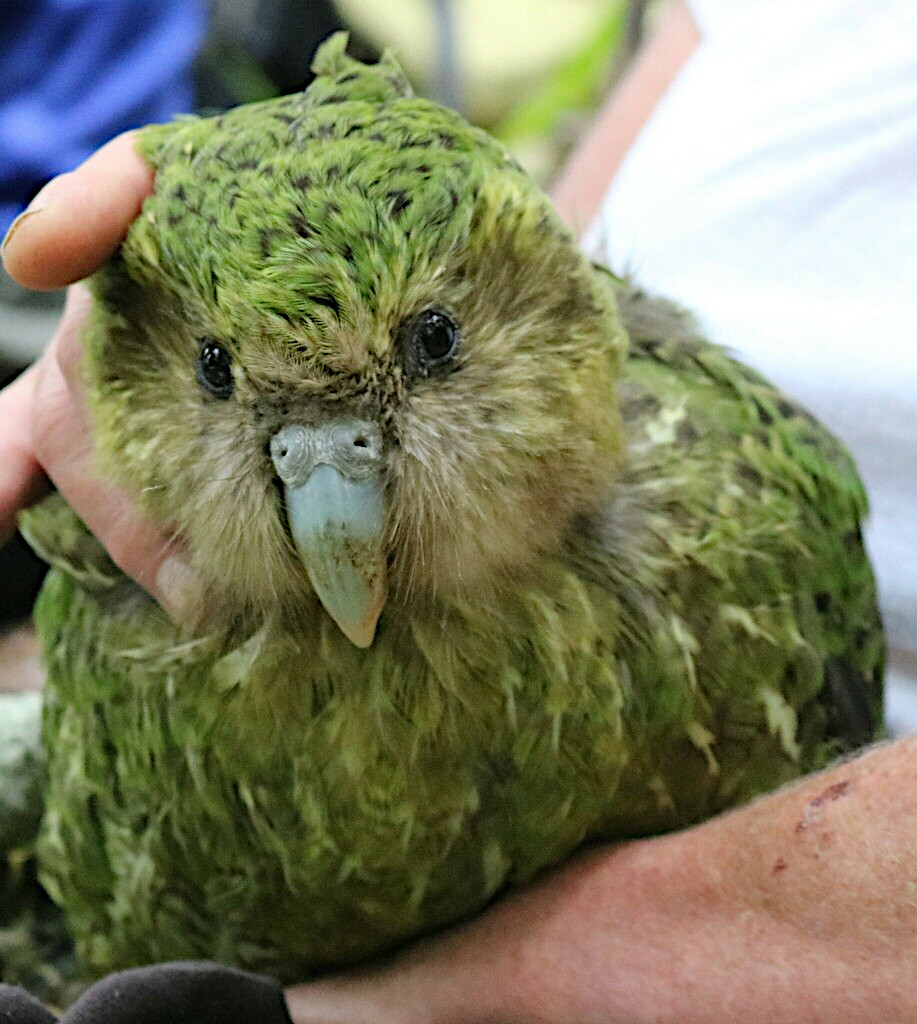
Photo: Oscar Dove, via iNaturalist, CC BY 4.0
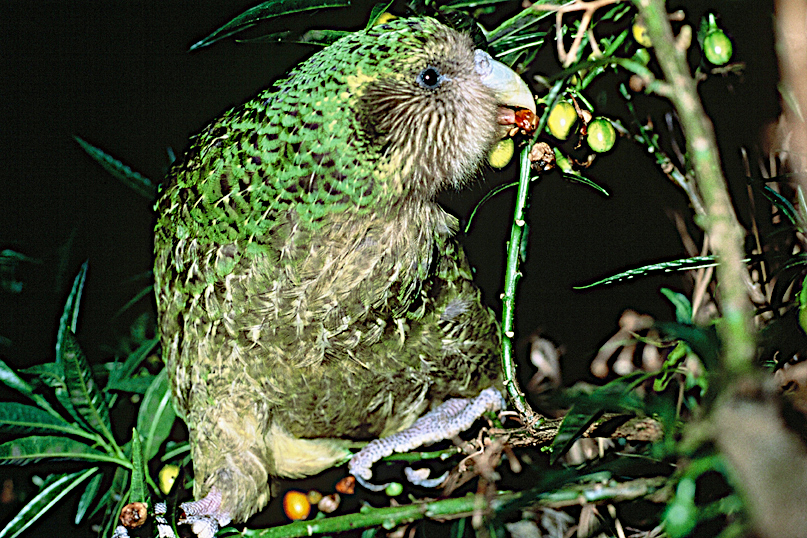
Photo: Department of Conservation – Kakapo “Trevor” feeding on ripe poroporo fruit, CC BY 2.0
And some BBC footage of the Kākāpō:
And before I forget:
A Livestream, that’s currently running 24/7: Kākāpō Cam: Rakiura the kākāpō – 2026 nest
A Podcast, with weekly updates on the 2026 breeding season: RNZ Kākāpō Files II
And Wikipedia pages relevant to various things I talk about in the episode: Kākāpō, the Rimu tree, the Trivers–Willard hypothesis, Negative Frequency-dependent Selection. And just for the sake of completeness, since the Kākāpō is one of the poster children for the phenomenon: Island Syndrome.
I couldn’t get anywhere near even a representative sample of the enormous amounts of Kākāpō information and research that’s out there these days, but here’s a selection to get you started if you want to immerse yourself:
A bibliography of kākāpō research publications from the NZ Department of Conservation.
Powlesland, Ralph & Merton, Don & Cockrem, John. (2006). A parrot apart: The natural history of the kakapo (Strigops habroptilus), and the context of its conservation management. Notornis. 53. 3-26.
Bergner, Laura & Dussex, Nicolas & Jamieson, Ian & Robertson, Bruce. (2016). European Colonization, Not Polynesian Arrival, Impacted Population Size and Genetic Diversity in the Critically Endangered New Zealand Kākāpō. Journal of Heredity. 107.
Fidler, Andrew & Lawrence, Stephen & McNatty, Kenneth. (2008). VIEWPOINT. An hypothesis to explain the linkage between kakapo (Strigops habroptilus) breeding and the mast fruiting of their food trees. Wildlife Research. 35. 1-7
Urban L, Santure AW, Uddstrom L, Digby A, Vercoe D, Eason D, et al. (2024) The genetic basis of the kākāpō structural color polymorphism suggests balancing selection by an extinct apex predator. PLoS Biol 22(9): e3002755.
Atkinson, Ian & Merton, Don. (2006). Habitat and diet of kakapo (Strigops habroptilis) in the Esperance Valley, Fiordland, New Zealand. Notornis. 53. 37-54
Nicolas Dussex et al., Population genomics of the critically endangered kākāpō, Cell Genomics, Volume 1, Issue 1, 2021, 100002
Music
Opening & Closing Themes: Running Waters and Acoustic Meditation by Audionautix (Jason Shaw), from audionautix.com. CC BY 3.0.
Fath Mo Bhuartha, De Bharr na gCnoc (Over the Hills), The Silent Grove and Reservoir Sunset (Remastered) by Axletree, CC BY 4.0
Kākāpō recordings are from the Department of Conservation (NZ) here. CC BY 4.0