
Following Charles Darwin on his voyage around South America, we arrive in Chile – where he discovers a remarkable little frog – the southern Darwin’s frog, Rhinoderma darwinii – that has one of the strangest approaches to fatherhood in the whole Animal Kingdom …
You can support the show – keep it going, keep it growing, show you value it – at The Wild Episode Substack. Become a paid subscriber there to get access to occasional bonus episodes and to keep the show on the road. Even as a free subscriber, you’ll still get regular posts/e-mails celebrating the wonders and curiosities of the Animal Kingdom.
Feel free to E-mail the show if you have any comments, complaints, corrections, suggestions, encouragement or even just want to say hello.
Please do share the show on social media, and rate and review it on your podcast app. That helps a lot. But best of all, of course, become a paid subscriber at The Wild Episode Substack.
Thank you!
Show notes below …
Southern Darwin’s frog (Rhinoderma darwinii) looks something like this:
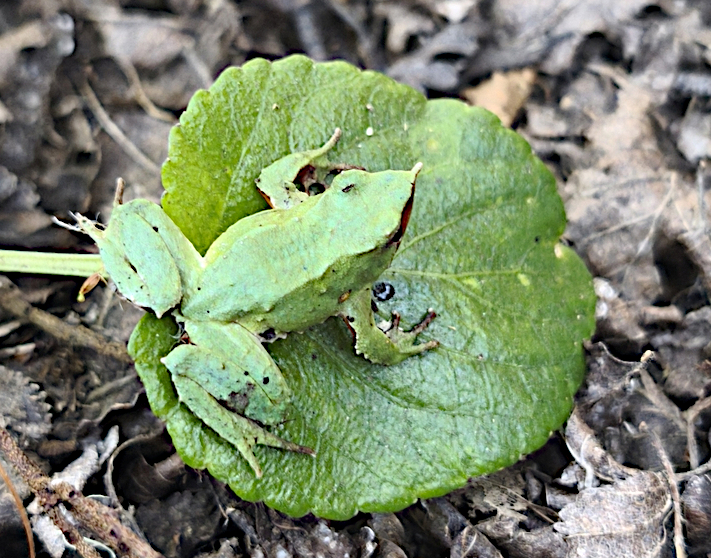
or this:
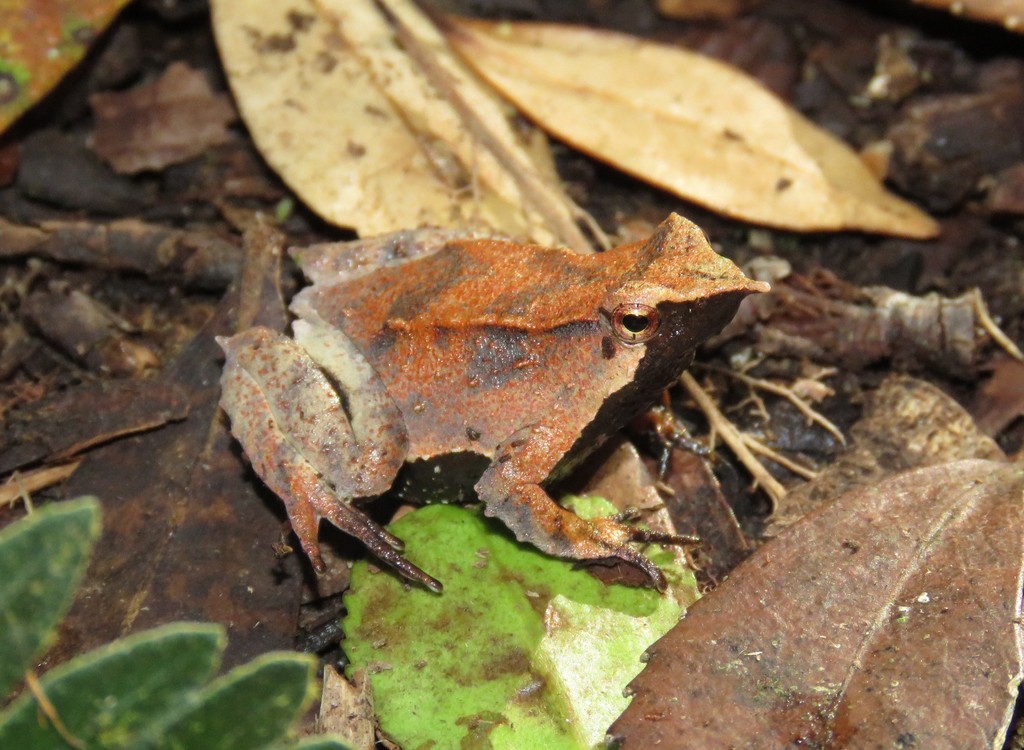
Photo: Nicolas Olejnik, via iNaturalist, CC BY 4
or this:
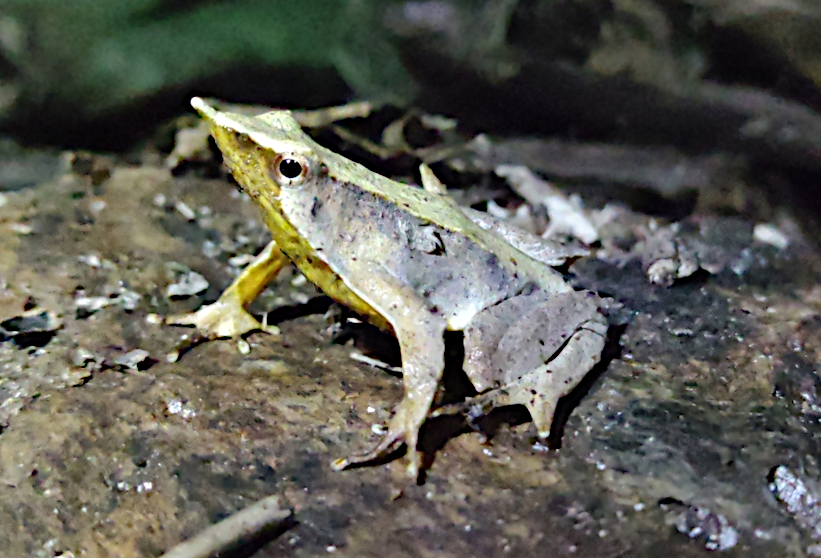
Photo: Edu Vergara, via iNaturalist, CC BY 4
or various other variations thereof. And the underside looks like this:
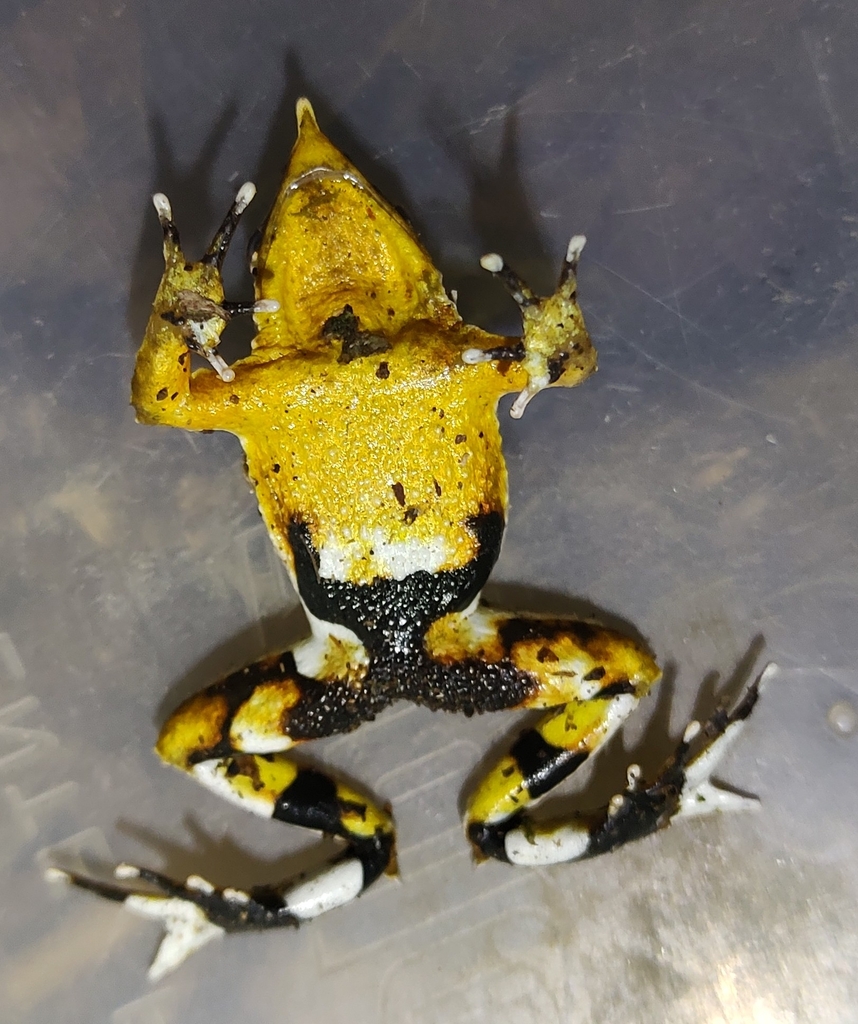
Photo: Edu Vergara, via iNaturalist, CC BY 4
or this:
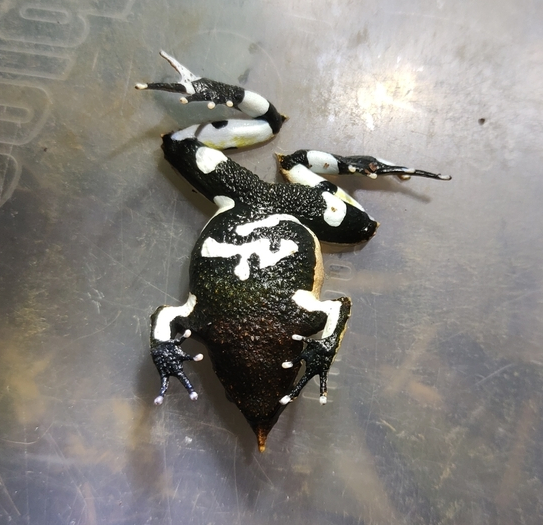
Photo: Edu Vergara, via iNaturalist, CC BY 4
or various versions thereof. Highly variable frogs, colour-wise, like I say in the episode.
You can see the actual hand-written page of Darwin’s field notes in which he recorded his first description of this frog here.
There are general overviews of the species here: Curious Species – Darwin’s Frog and here: Amphibiaweb – Rhinoderma darwinii.
But maybe the best introduction to both species – darwinii and rufum – their biology, history and conservation is here: Werning, H. (2009). From Darwin’s Treasure Chest: Rhinoderma. Reptiles & Amphibians, 16(4), 246-255.
A selection of more sciencey stuff:
Busse, Klaus & Bakker, Theo. (2011). Sex differences in polymorphic body coloration and dorsal pattern in Darwin’s frogs (Rhinoderma darwinii). The Herpetological Journal. 21. pp 227-234
Soto-Azat C, Valenzuela-Sánchez A, Collen B, Rowcliffe JM, Veloso A, Cunningham AA (2013) The Population Decline and Extinction of Darwin’s Frogs. PLoS ONE 8(6): e66957.
Cabeza-Alfaro O, Valenzuela-Sánchez A, Alvarado-Rybak M, Serrano JM, Azat C (2021) First case of male alloparental care in amphibians: tadpole stealing in Darwin’s frogs. Endang Species Res 45:331-335
Requires free JSTOR account: Goicoechea, Oscar, et al. “Evidence for a Trophic Paternal-Larval Relationship in the Frog Rhinoderma Darwinii.” Journal of Herpetology, vol. 20, no. 2, 1986, pp. 168–78.
Valenzuela Sánchez, Andrés & Harding, Gemma & Cunningham, Andrew & Chirgwin, C. & Azat, Claudio. (2014). Home range and social analyses in a mouth brooding frog: Testing the coexistence of paternal care and male territoriality. Journal of Zoology. 294.
Soto-Azat C, Valenzuela-Sánchez A, Clarke BT, Busse K, Ortiz JC, Barrientos C, et al. (2013) Is Chytridiomycosis Driving Darwin’s Frogs to Extinction? PLoS ONE 8(11): e79862.
Valenzuela-Sánchez, A., Azat, C., Cunningham, A. A., Delgado, S., Bacigalupe, L. D., Beltrand, J., Serrano, J. M., Sentenac, H., Haddow, N., Toledo, V., Schmidt, B. R., & Cayuela, H. (2022). Interpopulation differences in male reproductive effort drive the population dynamics of a host exposed to an emerging fungal pathogen. Journal of Animal Ecology, 91, 308–319.
Music
Opening & Closing Themes: Running Waters and Acoustic Meditation by Audionautix (Jason Shaw), from audionautix.com. CC BY 3.0.
Modified versions of: Feather by Gurdonark, CC BY 4; World’s Strongest Camel, Please, Not The Mind Fizz and The Spiders Of Battersea Park by Doctor Turtle, CC BY 4